


eFootball™
KONAMI
I approached eFootball™ as someone looking for a football game that could become a regular mobile habit rather than a quick one-match novelty. Developed by KONAMI, it is a free sports game built around playing football against users around the world. That promise sounds simple, but the actual experience depends heavily on how patiently you learn its controls, team-building flow, and online rhythm.
My first impression was that this is a serious football simulation adapted for a touchscreen, not an arcade game that lets you win by tapping randomly. A well-timed pass, a sensible run, and a calm defensive decision matter more than constant attacking. That makes the first few matches feel demanding, but it also gives victories more weight. When a move works because I created space instead of just rushing forward, the game feels genuinely rewarding.
What to expect before your first match
The game has a large audience: its listing shows an average rating of 4.2 from around 17 million ratings, with more than 100 million installs. Those figures suggest that finding opponents and discovering community discussion should be relatively easy, but popularity does not make the learning curve disappear. I still had to adjust to the pace of matches and to the difference between pressing a button and holding it at the right moment.
Related News

The free entry point is useful because I can install it and begin without paying. At the same time, optional purchases range from $0.29 to $99.99 per item, so I recommend deciding early how you want to play. If your goal is to learn the football itself, you can treat purchases as something separate from your progress. If you are tempted by faster squad development, set a personal limit before the menus start making every improvement feel urgent.
Its Everyone age rating makes it approachable for a broad audience, although younger players may still need help understanding optional spending. The current version is 10.3.0, and it requires Android 7.0 or later. On a compatible device, I would still leave enough storage and close unnecessary background apps before a longer session, because a football game is much less enjoyable when a match is interrupted by a struggling phone.
Related News

Why WhatsApp Messenger Still Makes Everyday Communication Feel Easy

Jurassic World: The Game Is the Better Dino Tycoon for Strategic Players

Threads in Real Life: Who Should Join, Lurk, or Leave

How SHEIN Turned Shopping Into an Endless Content Feed

How to Make Fortnite Feel Smarter on Mobile

Should You Switch to Microsoft Outlook on Mobile?
The most important expectation is that this is not the best choice for somebody who wants instant, effortless goals. I would choose it for a player who enjoys learning patterns, adjusting tactics, and improving through repetition. If you prefer a very casual football game where every attack becomes a highlight, a lighter arcade alternative may suit you better.
Getting through the first setup without feeling lost
The opening menus can feel busier than the first match deserves. My advice is to resist the urge to inspect every reward, squad option, and event immediately. Start by identifying the route to a playable match, then return to the management screens after you understand how your team feels on the pitch. This small change prevents the setup phase from becoming a spreadsheet exercise.
Before taking the field, I check the basic control layout and spend a few moments noticing which actions are comfortable with my thumbs. The exact arrangement matters less than consistency. If I keep changing where I expect a pass or defensive command to be, I make mistakes that look like football decisions but are really muscle-memory problems.
Gallery
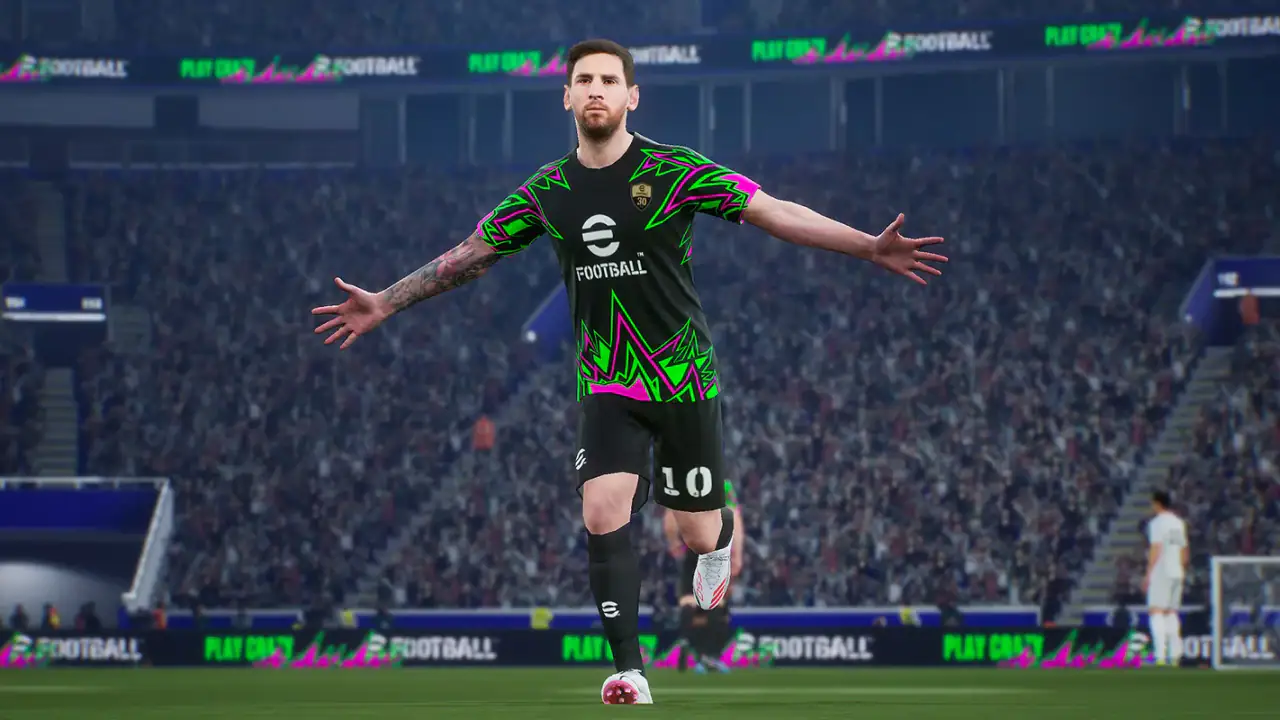
I also suggest beginning with a conservative team shape. A crowded attack can look attractive in the menu, yet it leaves fewer safe passing options when possession changes. For a first-time player, a balanced setup makes it easier to see why a move failed. Was the pass too ambitious, was the receiver marked, or did the team simply have no nearby support? A stable formation gives clearer answers.
Do not spend your early resources just because a new option appears. First learn what your current players can do. A fast player may be useful in open space but less effective when the opponent sits deep. A strong passer can help control a match, but only if I give that player angles instead of forcing a difficult ball. Understanding those differences is more valuable than chasing an upgrade I do not yet know how to use.
One practical habit helped me considerably: I treat the first few matches as control practice, not as a test of the squad. I focus on receiving the ball, turning away from pressure, and making one extra pass before attacking. That approach lowers the pressure to win immediately and gives me a reliable foundation for later online matches.
The first meaningful success is usually a simple one
For a new player, the first satisfying achievement does not need to be a spectacular goal. I would define success as completing a patient attack that ends with a clean chance. That might mean recovering the ball, passing sideways instead of forcing it forward, drawing a defender out, and then using the open lane. Once I could repeat that sequence, matches started to feel understandable rather than random.
Passing is where I recommend concentrating first. A rushed forward ball often gives possession away and immediately exposes the defense. Instead, I look for the safest available teammate and use that pass to reset the attack. This is not passive play. It is a way to make the opponent move before I commit to a dangerous action.
A useful touchscreen technique is to separate intention from speed. I decide where the next pass should go before pressing, then release the action cleanly rather than holding it while changing my mind. That small discipline reduces accidental passes and helps me notice whether the problem is my timing or the player’s position.
Defending requires the same restraint. I used to chase the ball carrier too aggressively, opening a lane behind the player I controlled. A better approach is to protect the dangerous space first and pressure when the opponent’s options narrow. Even when I do not win the ball immediately, forcing a backward pass can be a successful defensive action because it slows the attack.
My first reliable match routine became simple:
- Keep the opening possession safe instead of trying to score from the first movement.
- Use short passes to learn where teammates naturally appear.
- When defending, protect the central route before chasing wide.
- After losing the ball, recover shape before attempting a risky tackle.
- Notice one mistake after the match and work on only that mistake next time.
This method is especially helpful when playing against real users. Online opponents may punish a repeated pattern quickly, but they also reveal weaknesses that computer-controlled matches can hide. If every attack begins with the same forward pass, a human opponent will usually anticipate it. Varying the starting point of an attack is one of the first changes that made my play less predictable.
Why matches can feel different from one another
Some games feel open and fluid, while others become a struggle for every metre. I learned not to interpret every difficult match as proof that the controls are failing. The opponent’s style, my formation, and my own decision-making all change the rhythm. A player who is comfortable in fast transitions may look ordinary when there is little space, while a patient passer becomes more valuable in a crowded match.
That is why I avoid judging a new player after one defeat. I look for a repeated issue across several matches. If I lose possession whenever I turn near the sideline, I stop turning there. If my forwards disappear, I check whether I am sending the ball too early or leaving them isolated. This kind of diagnosis is more useful than changing the entire squad after every loss.
The game also rewards attention to stamina and positioning, even when the interface does not make every consequence feel obvious at first. Constantly sprinting can make a player less useful later, and pulling defenders out of position can create problems that appear only several seconds afterward. A calmer tempo often produces better chances than nonstop acceleration.
Common confusion in the menus and on the pitch
The biggest early confusion is the difference between improving a team on paper and improving how it plays in my hands. A higher-rated player is not automatically the right answer to every problem. If my real weakness is poor spacing, replacing a player may change very little. I get more from first learning the role I need, then deciding whether the squad actually lacks it.
Another point that can surprise new users is the gap between offline comfort and online success. Against a predictable opponent, I can repeat a move until it works. A real user reacts, changes pressure, and notices habits. I therefore use easier matches to practise a specific action, but I do not assume that success there proves I am ready for every online situation.
Touch controls can also create misleading mistakes. If a pass goes somewhere unexpected, I ask whether I selected the wrong teammate, aimed too late, or asked a player to perform while moving away from the ball. Blaming the controls immediately prevents useful learning. I found that slowing down my inputs helped more than simply playing faster.
Team management has its own trap: constantly rebuilding. It is tempting to make changes after every disappointing result, but a stable lineup gives me a reference point. I prefer to alter one important element at a time, play enough matches to understand the effect, and then decide whether the change helped. This is slower, but it protects me from confusing unfamiliarity with improvement.
Optional purchases are another area where I recommend caution. The game is free to start, but the presence of in-app items can make progress feel connected to spending if I let it. I keep the focus on learning matches and only consider a purchase when I understand exactly what it changes for my experience. For families, discussing that boundary before handing over the device is sensible.
A realistic everyday session
Imagine I have twenty minutes after work and want football without committing to a long evening. I begin with a short practice-oriented match rather than immediately entering the most competitive option. In the opening minutes, I concentrate on keeping possession and observing how the opponent defends. If I create one good chance through a patient move, I already have something useful to take into the next game.
If the match becomes frustrating, I do not automatically respond by playing more aggressively. I pause between games, identify whether I lost the ball in midfield or failed to cover a runner, and choose one adjustment. That makes a short session productive even when the result is not a win. The game works best for me when each match supplies a small lesson rather than acting as a verdict on my ability.
For a longer weekend session, I might spend more time refining the squad and testing a different approach. The danger is fatigue: late in a session, I make impatient passes and blame the opponent for chances I created for them. Taking a break is not just good general advice; it directly improves decision-making in a game where timing matters.
Who will enjoy it, and who should look elsewhere
I would recommend this game to football fans who want matches with room for tactical thought and who are willing to practise. It suits players who enjoy learning how space opens, how pressure changes a passing lane, and how a defensive mistake can begin well before the shot. The global online focus also gives it a social competitive feel that a purely offline football game cannot reproduce.
I would be more cautious recommending it to someone who wants a quick, relaxed game with almost no setup. The menus, squad decisions, and control learning take attention. It is also not ideal for a player who dislikes online competition or who finds optional purchases distracting. In those cases, a simpler arcade football title or a fully offline alternative may provide a more comfortable experience.
Compared with a traditional console-style football game, the mobile format makes short sessions easier, but the touchscreen removes some precision. Compared with arcade football apps, this title asks for more patience and rewards controlled decisions. That middle ground is its identity: it is accessible enough to play on a phone, yet demanding enough that button mashing quickly stops working.
How I would approach the next step
Once the first successful passing sequence feels repeatable, I would not immediately chase every available challenge. I would choose one area to develop: defending without overcommitting, building attacks through the middle, or creating space on the wings. A focused goal makes progress easier to notice and prevents the game from becoming a blur of menus and results.
I would also keep a small mental checklist before each match. What is my safest outlet if the first attack fails? Which opponent looks most dangerous? Am I pressing because the situation calls for it, or because I am impatient? These questions take seconds, but they turn the match into a series of readable decisions.
After several sessions, I would revisit the squad with a clearer purpose. Instead of asking which player looks most impressive, I would ask what my style lacks. Do I need better passing options, more defensive cover, or a way to exploit open space? This is one of the game’s most rewarding trade-offs: the right improvement is connected to how I play, not just to a larger number in a menu.
My overall recommendation is to treat eFootball™ as a football game to learn, not merely a football game to launch. Its free price makes trying it easy, and KONAMI has built an experience with enough depth to keep a committed player interested. The large player base and worldwide matches add energy, while the control demands give victories meaning. The friction is real, especially during the first setup, early defeats, and decisions around optional spending.
Still, once I stopped rushing and began treating each match as practice for a specific skill, the game became much more welcoming. Start with safe passing, defend space, change one thing at a time, and let your first meaningful success be a well-built chance rather than a dramatic score. If that process sounds enjoyable, this is a strong sports game to try. If you want instant arcade action with minimal management, I would choose a simpler alternative instead.
FAQs for eFootball™
What platforms is eFootball™ available on?
eFootball™ is available on multiple platforms, including Android and iOS for mobile users. It is also accessible on gaming consoles like PlayStation and Xbox, as well as on PC. This multi-platform availability allows players to enjoy the game across different devices and compete with a wider community of gamers.
Is eFootball™ free to play, or does it require in-app purchases?
eFootball™ is free to download and play, offering a wide range of features without any initial cost. However, the game does include optional in-app purchases. These purchases can enhance the gaming experience by unlocking additional content, such as player packs and special items, but they are not mandatory to enjoy the game.
What are the system requirements for eFootball™ on mobile devices?
To run eFootball™ smoothly on Android, a device with at least 2GB of RAM and a quad-core processor is recommended. For iOS users, an iPhone 6s or newer is generally required. It's important to ensure your device has enough storage space and meets these specifications for optimal gameplay performance.
How often does eFootball™ receive updates and new content?
eFootball™ frequently receives updates, including new content, bug fixes, and improvements to gameplay. These updates are aimed at enhancing the user experience by adding new features, player rosters, and seasonal events. Regular updates ensure that the game remains fresh and engaging for players.
Can you play eFootball™ offline, or is an internet connection required?
eFootball™ primarily requires an internet connection for most of its features, including online matches and live events. However, there are limited offline modes available for practice and local play. To fully experience the game and access all its features, a stable internet connection is recommended.
Pros
- Realistic graphics enhance gameplay.
- Frequent updates with new features.
- Wide variety of teams and players.
- Smooth multiplayer experience.
- Customizable team formations.
Cons
- Requires a stable internet connection.
- Large file size for installation.
- Occasional in-game ads.
- Some features require in-app purchases.
- Limited offline play options.


